
2026-11-02
Retail POS Thermal Paper Specification Verification: Gram Weight, Width, and Custom Parameters
For retail POS thermal paper returns/exchanges, issues rarely stem from the paper itself but rather mismatches in basis weight, width, roll diameter vs. core, and custom packaging. Follow these four steps to ensure your quote and sample align on the same specifications.

Receipt paper for the checkout counter is often overlooked, yet it's one of the most frequently returned items. Issues rarely stem from the paper itself; instead, they usually arise from misaligned specifications: the paper roll exceeds the 8mm capacity of the paper compartment, thermal printing is reversed, or the core inner diameter differs by 1mm from the printer spindle. Follow these four steps to verify: basis weight, width, roll diameter and core, plus customization and packaging. Only after confirming each item will your quote and sample match exactly.
1. Weight: Confirm the device first, then discuss thickness.
Thermal paper weight is measured in grams per square meter. Retail cash registers typically use a range of 55g to 80g, with 55g, 60g, 65g, 70g, and 80g being the most common options. 55g rolls offer greater length per unit, allowing more receipts per roll; they are ideal for high-frequency, short-receipt scenarios like convenience stores and bubble tea shops. Weights from 60g to 65g balance paper feed stability and cost. Paper over 70g has higher stiffness, making it suitable for stores requiring durable receipts or using high-speed printers.
Higher grammage isn't always better. The coating-to-paper ratio determines color depth and print head wear rate. If you increase the grammage without matching the coating, carbon buildup and paper dust will rise together. Another common confusion involves labeled specifications: grammage and thickness aren't directly interchangeable. Even at the same grammage, thickness varies by manufacturer. Your purchase order should specify a fixed thickness value.
2. Width: 57mm and 80mm are the mainstream sizes; measure the paper bin, not the model number.
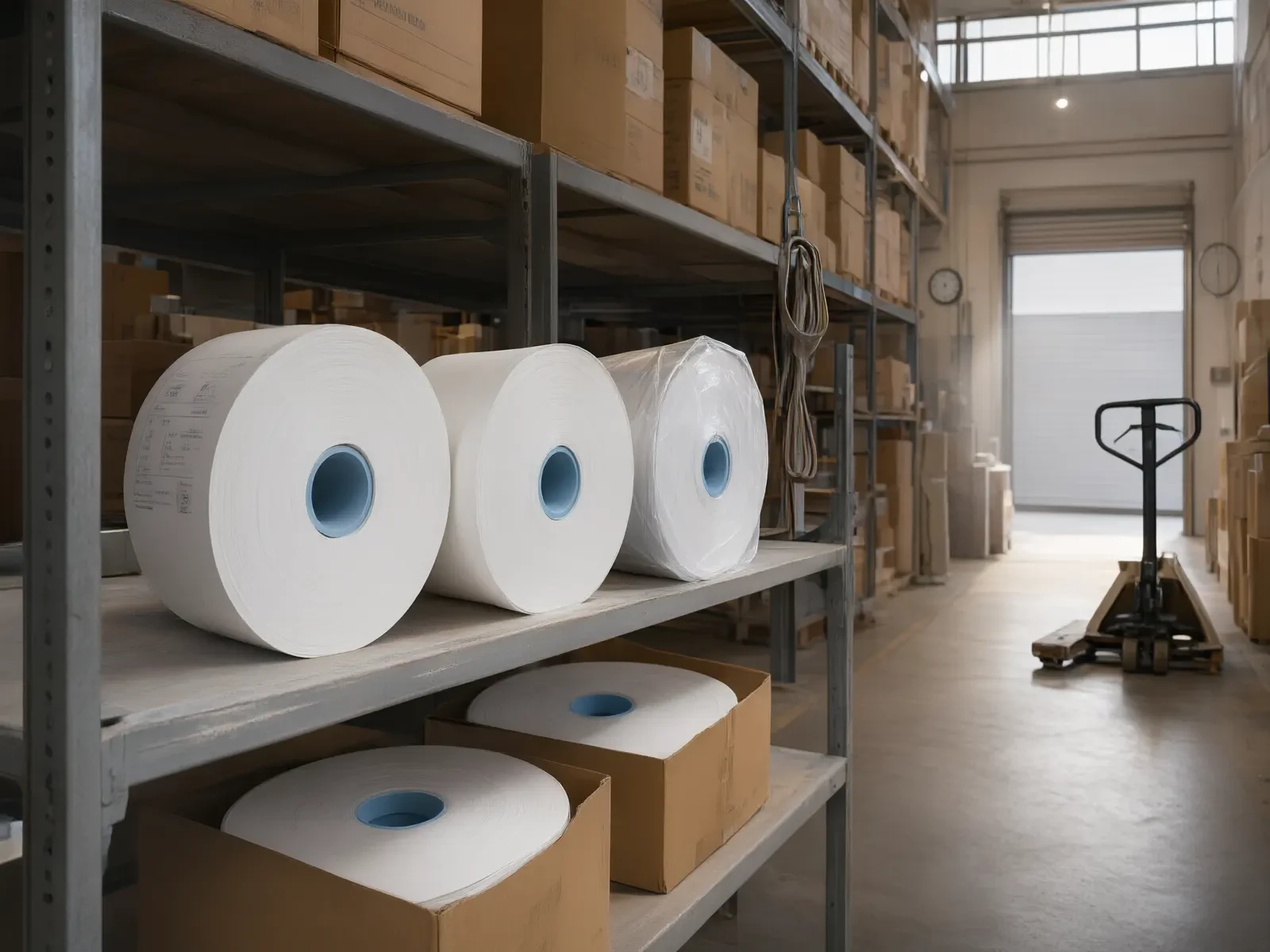
Retail receipt thermal paper widths are primarily available in 57mm and 80mm. The 80mm size is used at main checkout counters and self-service kiosks in supermarkets and restaurants, allowing more line items per ticket. The 57mm size is commonly used for handheld POS devices and queue management systems. Older equipment may still require 76mm or 44mm specifications; please verify compatibility by model.
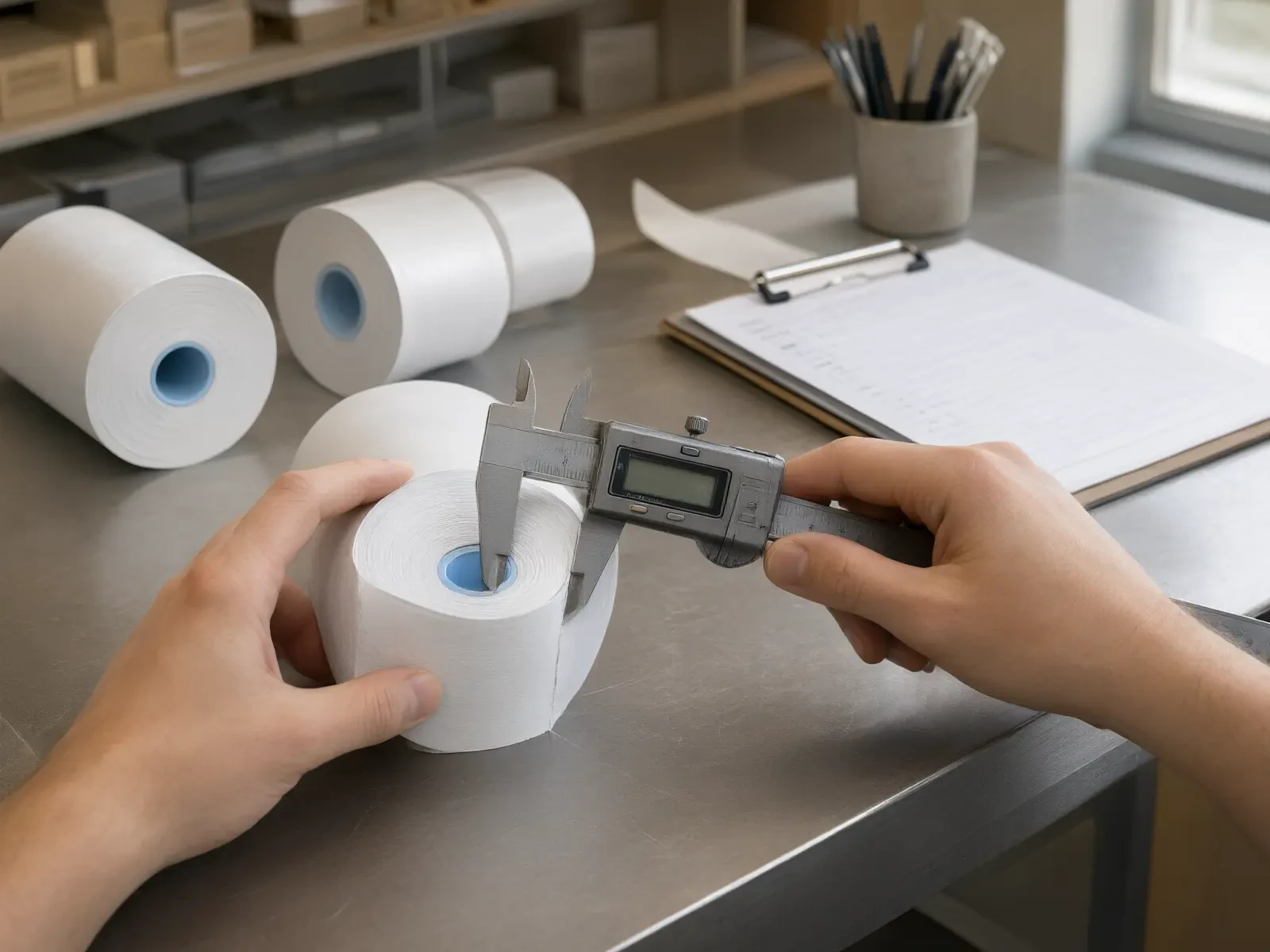
When verifying width, use the actual roll width rather than the paper cassette's nominal width. Slitting tolerance is typically controlled within ±0.5mm. If this range is exceeded, the roll may shift left or right in the cassette, causing print misalignment. To measure, take three rolls from the same batch and measure the width at the start, middle, and end; use the minimum value for evaluation.
3. Roll Diameter and Core: Determines Paper Change Frequency and Equipment Compatibility
Roll diameter affects paper change frequency. Common roll diameters in retail stores are 40mm, 50mm, 60mm, and 80mm; larger diameters provide more meters per roll, reducing the need for frequent changes during peak hours. The maximum diameter is limited by the available space in the paper compartment. Common core inner diameters are 12mm, 13mm, 18mm, and 25mm. These must match the printer's spindle diameter; insufficient core strength can cause slippage and vibration at high speeds.
Purchase price comparisons should be based on meters per roll, not just roll diameter. For the same 8mm width, there is a significant difference in total length between rolls of 6mm and 8mm diameter; comparing unit prices directly can lead to incorrect conclusions. We calculate split weights per order based on width, roll diameter, and core size. These parameters are verified before shipment to prevent issues at the store level, such as rolls not fitting into the paper holder.
4. Customization Key Points: Convert parameters into an actionable checklist
Custom thermal paper requires six specifications: basis weight, width, roll diameter with core, meters per roll, print side orientation, and coating type. Print sides are inner or outer; installing incorrectly results in blank receipts. Choose the coating based on usage environment: cold chain, fresh food, and greasy food service scenarios demand higher oil resistance, water resistance, and abrasion resistance.
Packaging is also part of the specification. The number of rolls per carton, whether individual rolls are shrink-wrapped or paper-wrapped, and outer carton markings all affect in-store unpacking and warehouse efficiency; these should be clearly stated in the contract for bulk orders. During acceptance testing, we recommend first producing a sample roll and conducting real-world tests on the target machine for paper feed, color depth, and print retention before proceeding with mass production. Providing the paper type, basis weight, width, and monthly usage during the quoting phase typically yields comparable pricing and lead times.

Shandong Chenming Paper New Materials Co., Ltd. has been producing and supplying thermal paper, copying paper, thermal labels, and household tissue since 2014, serving over 50 countries and regions worldwide. Retail checkout is just one application of thermal paper. The parameter verification method applies universally across scenarios: clearly define specifications first, then discuss volume and lead time. This approach significantly reduces the risk of rework and returns.
Related pages:Thermal Paper Specifications & Customization、Application Areas、Get a Quote。